Rudolph W. Giuliani is an American lawyer, political leader, and author who was the mayor of New York City between 1994 and 2001. Prior to his mayoral position, Giuliani was a federal prosecutor and attorney whose work had been marked by his handling of significant crimes and cases of corruption. His role as America’s Mayor came about due to his handling of the events on 9/11. In Leadership, Giuliani provides management and leadership skills that he learned from being in government, and dealing with crisis situations and running a city.
Rudolph W. Giuliani
"LEADERSHIP" - RUDOLPH W. GIULIANI
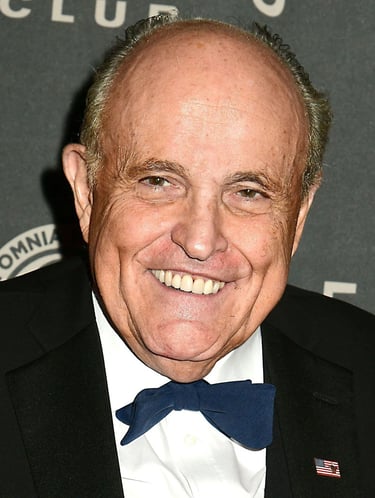
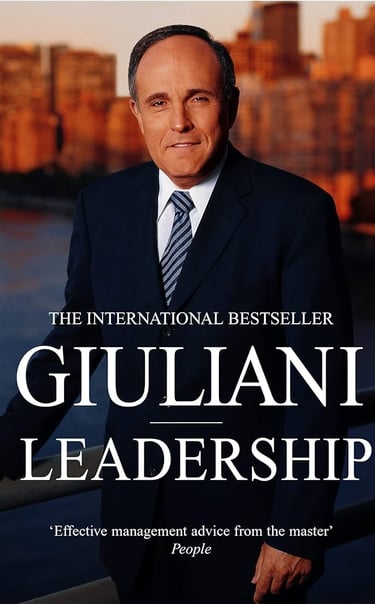
The Leadership by Rudolph Giuliani is a nonfiction book that includes elements of autobiography, management tips, and guidance on effective leadership. The book was published in 2002 and deals primarily with Giuliani’s leadership role as the Mayor of New York City. In particular, the author discusses how his techniques and strategies of leadership helped him cope with the challenges that arose in his life, including high crime levels, administrative issues, and the events of September 11.
One of the most positive characteristics of the book is its practical nature. Instead of dwelling on the concepts of leadership from a purely theoretical perspective, the author illustrates his points by providing examples from real-life situations. In the author’s view, leadership involves more than issuing orders. Rather, a good leader must be responsible, able to make important decisions in a stressful situation, and set a proper example for his subordinates to follow. Throughout the book, Giuliani consistently stresses the importance of discipline, preparation, accountability, and teamwork. This makes the book interesting not only for politicians and managers but for all other readers as well.
Giuliani's book starts with a description of the events of September 11, 2001, when terrorists conducted a devastating attack against the World Trade Center buildings in New York. In these chapters, the author provides information about the events that took place following the attack, including chaos and destruction caused to the city. Giuliani also talks about the way his colleagues reacted during the period of emergency. They include some of the most exciting parts of the book. This is because these chapters illustrate the leadership skills required during emergencies such as the ones that happened after 9/11. The importance of preparation, critical thinking, and communication during the period was discussed.
One of the most prominent themes addressed in the book is accountability. In Giuliani's opinion, leaders should take full responsibility for their successes and failures. Leaders who transfer blame for their mistakes do not deserve to be called leaders in his opinion. According to Giuliani, accountability leads to trust among employees and inspires them to do things properly. This theme is mentioned in several chapters. In his experience, Giuliani shows that he was a demanding and strict leader who valued results.
Moreover, the former mayor highlights the need for preparation. One of his principles says, “prepare relentlessly.” It means that leaders need to prepare themselves for any possible scenario. In his opinion, frequent drills and careful organization allowed New York City to cope better with crises. The relevance of the point does not depend on the field because preparation is essential in any sphere, including education and business. People are likely to understand the principle because it is easy to relate to everyday life.
As for the writing style, Giuliani presents his principles clearly and directly. The author avoids too complex terms and describes his experience concisely. Numerous examples are used, making it easier for people to comprehend the principles. Nevertheless, some parts sound redundant due to the repetition of such concepts as discipline, loyalty, and dedication. Sometimes, the book resembles a self-defense of Giuliani and his actions. Readers, who expect theoretical and scientific information about leadership from the book, may perceive the principles of the leader as simplistic and naive.
A fascinating feature about the book is the connection between leadership and personal qualities. Giuliani describes the development of his style through upbringing, education, and professional experience. He describes the lessons he got from his parents, mentors, and from being a federal prosecutor. In his opinion, personal integrity and discipline are important for becoming an efficient leader. He suggests that every good leader should study constantly, be independent, and not rely on experts exclusively. Thus, the book takes on a highly motivating tone, and it is obvious that a good leader needs to gain experience.
The book is not perfect. Despite all the great lessons Giuliani offers, some critics state that there is nothing new about his theories. Ideas about team building, personal responsibility, preparation, and communication have long been used in numerous books about leadership. The only exception is that they are explained through personal experience instead of theoretical knowledge and academic research. Due to such features, the book appears to be rather autobiographical in some parts.
Another weakness is that the book mostly concentrates on Giuliani's point of view. The achievements of the mayor are highlighted, while alternative points of view get little attention. People who do not know anything about the political conflicts surrounding Giuliani's administration might feel that the book is too much into self-promotion. Still, practical illustrations and personal stories will keep the readers occupied.=The most vivid piece of information the reader learns from the book is that leaders should stay cool in times of emergency. Giuliani continuously points out that the first thing the citizens expect of their leader is confidence. In case the leader shows panic and chaos, such feelings can immediately spread among the population. In connection with the events on September 11, this lesson becomes especially valuable. The book clearly demonstrates how communication and composure affect public confidence.
The book would be appropriate reading material for those who are interested in management, administration, politics, and personal growth. Young students can learn a lot from Giuliani's approach to discipline and strong character. However, sometimes it is necessary to have some patience while reading the book since long descriptions of discussions, political strategies, and administrative decisions may cause boredom.
On balance, Leadership is an enlightening and inspirational book that blends practical teachings with personal anecdotes. What makes the book unique is its ability to illustrate leadership concepts in actual life settings, particularly during a state of emergency. Even though there are some recurring themes and lack of innovation in ideas, the book retains its relevance owing to its practical illustrations and straightforward language. Giuliani does well in articulating the point that leadership goes beyond having power but involves accountability, preparedness, communication, and bravery.
In summary, Leadership offers practical insights into the complexities of handling people and making decisions. Though not a comprehensive analysis of the theories of leadership, the book manages to impart practical lessons using life experiences. Individuals interested in reading about leadership stories or seeking insights on crisis management would find the book appealing.
This page presents a review of Leadership by Rudolph W. Giuliani, a book that shares practical lessons on leadership, decision-making, and crisis management based on the author’s real-life experiences. The review highlights Giuliani’s leadership principles, his handling of challenging situations, and the importance of discipline, accountability, preparation, and teamwork in achieving success.